Monuments After Dark
The National Mall empties out after sunset. The monuments stay. Marble and granite under lamplight, silence where the crowds were, and the kind of stillness that makes you understand why they built these things in the first place.
Lincoln Memorial
Thirty-Six Columns and a Seated President
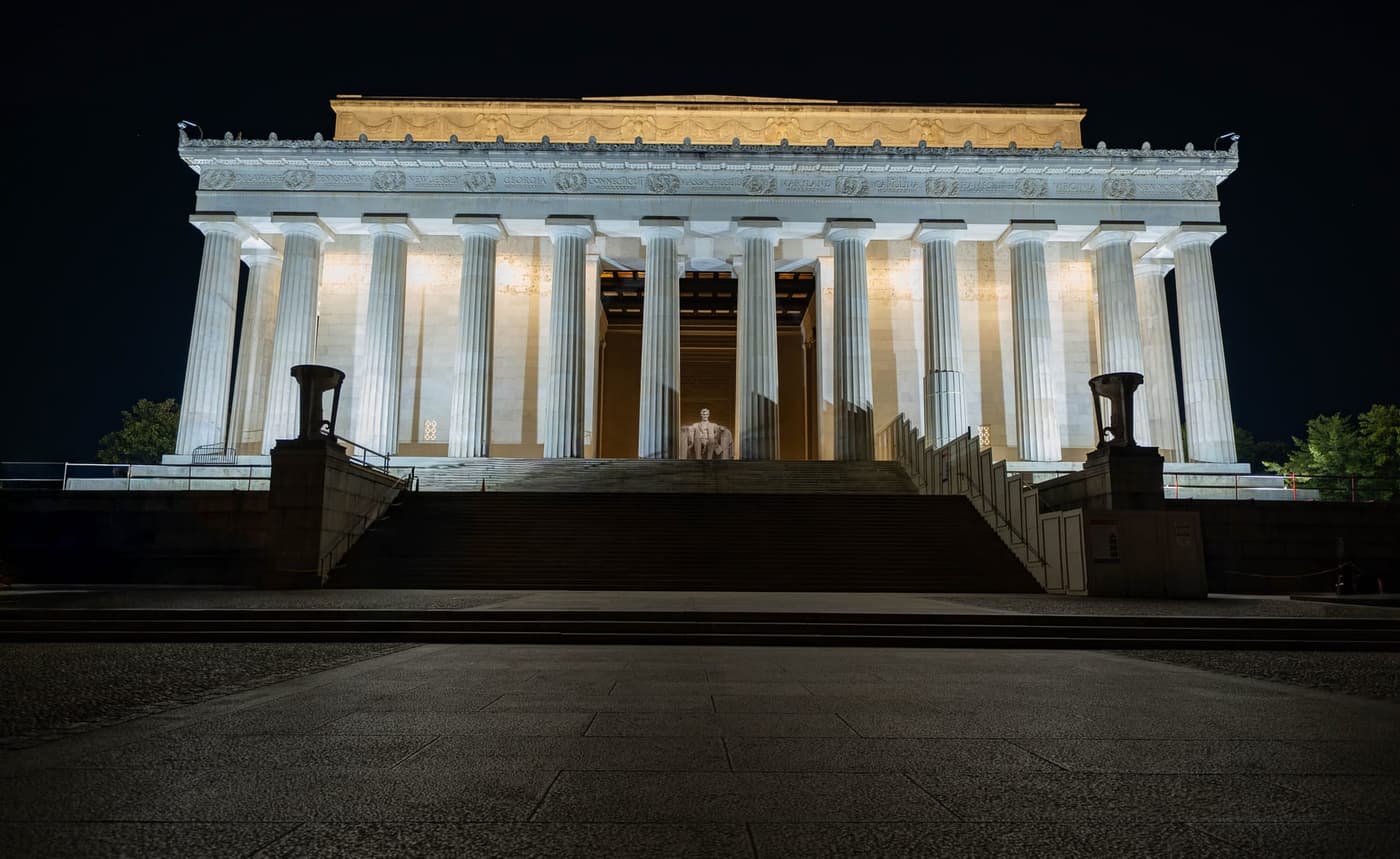
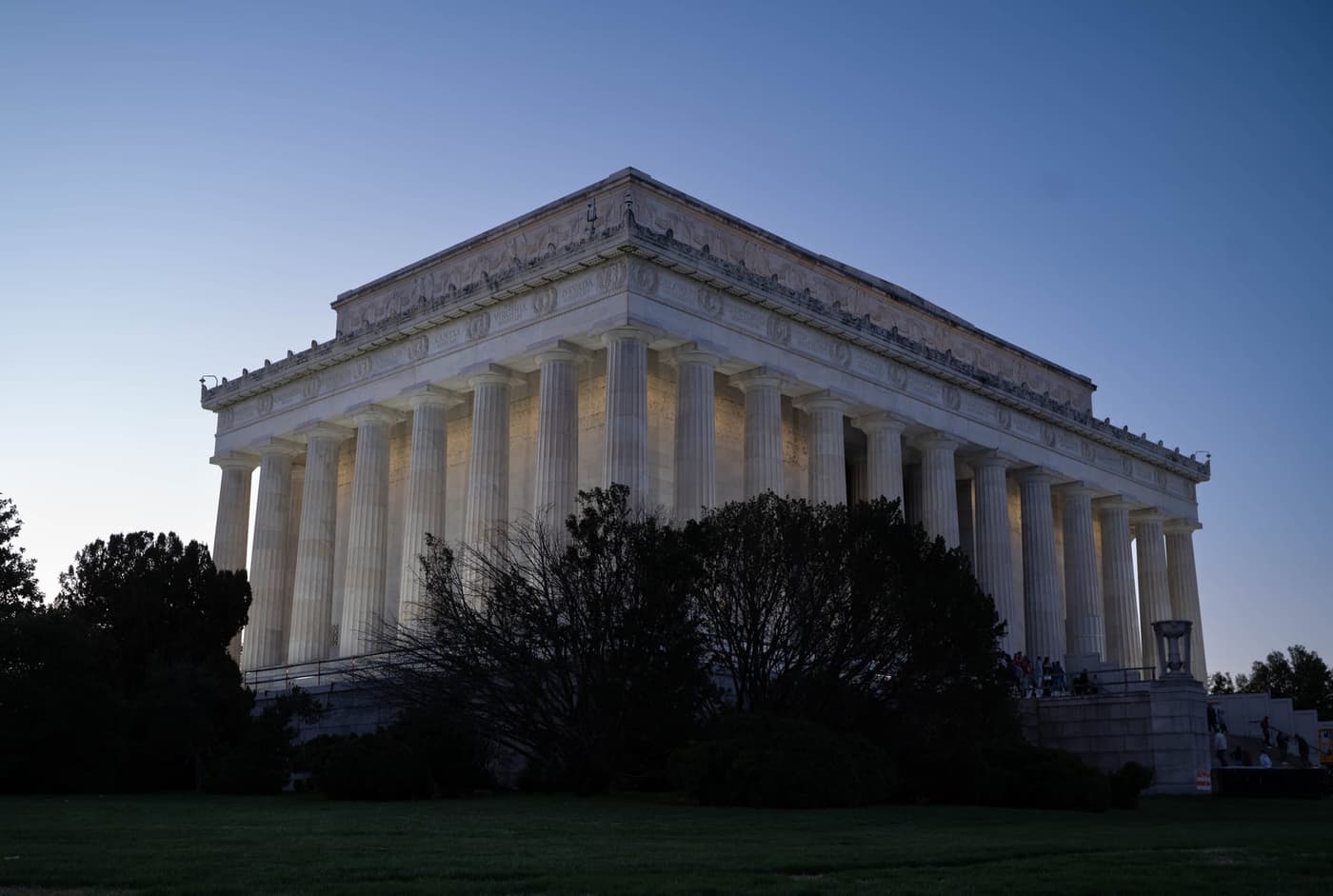
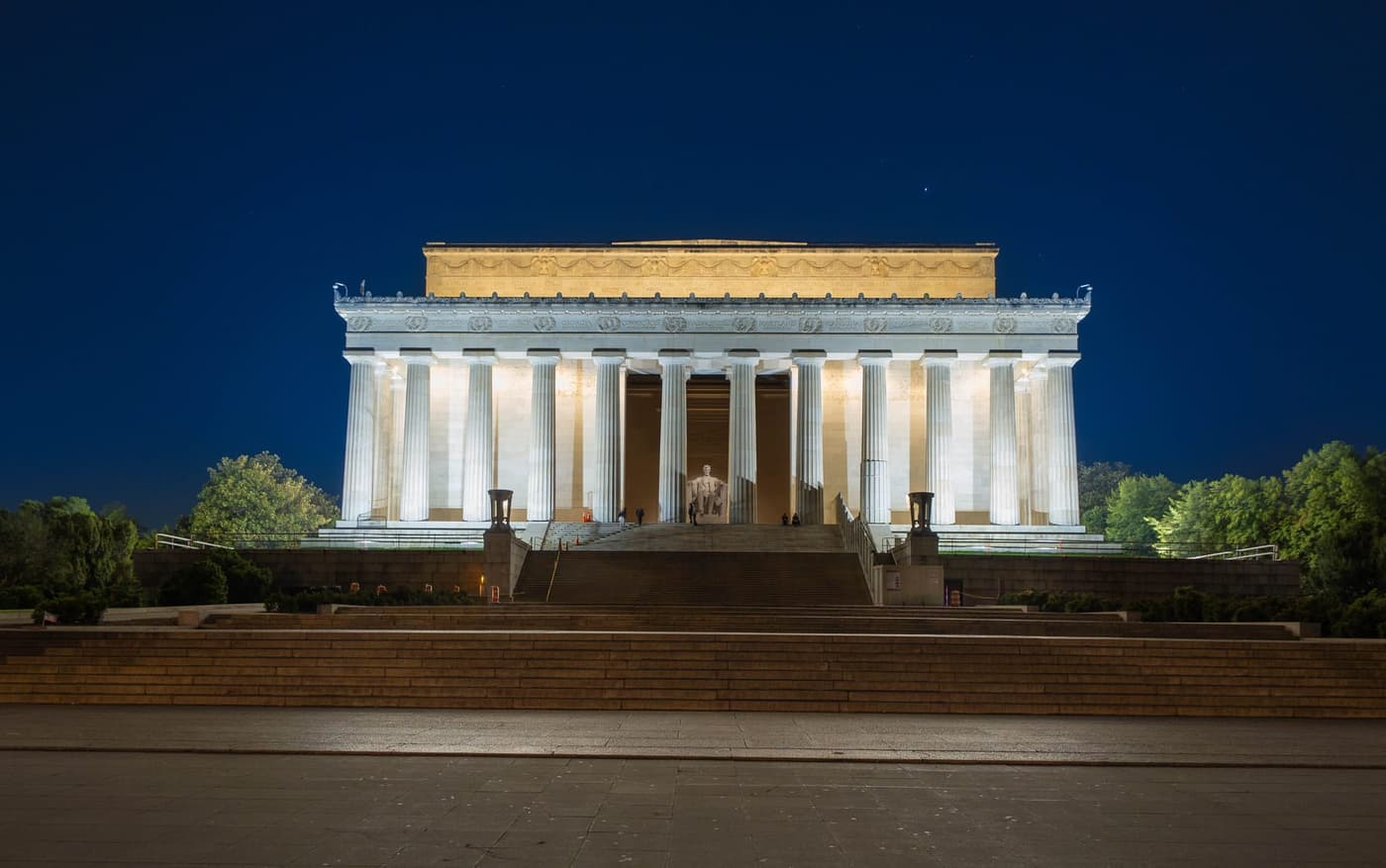
The Lincoln Memorial was never meant to be just a statue. Henry Bacon designed it as a Greek Doric temple — 36 exterior columns, one for every state in the Union at the time of Lincoln's death in 1865, each 44 feet tall and slightly swelled at the center so they appear perfectly straight from a distance. The names of those 36 states are carved into the frieze above them. A second ring, inscribed along the attic parapet, lists the 48 states that existed when the memorial was dedicated in 1922. Alaska and Hawaii, admitted later, are honored on a plaque at the entrance.
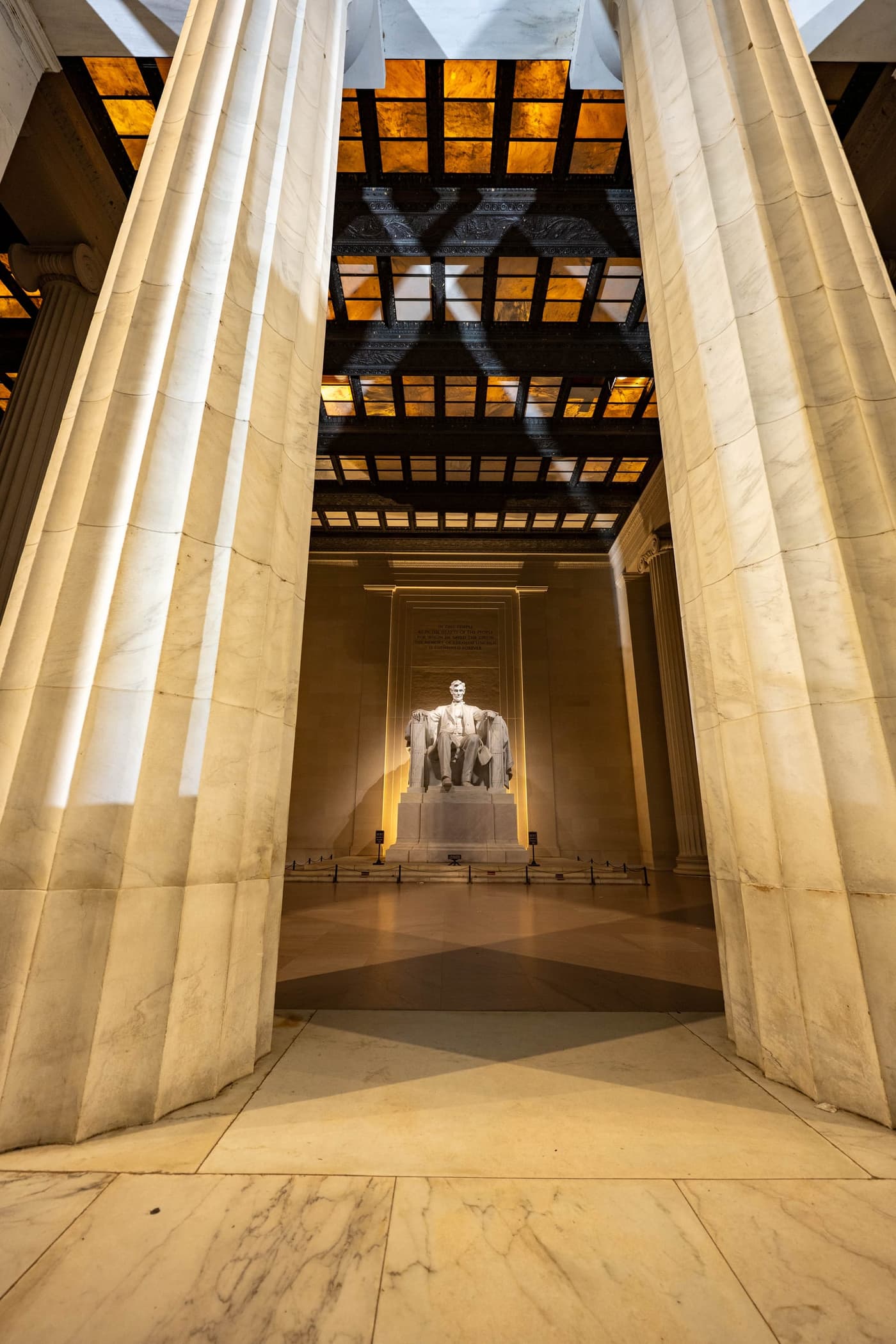
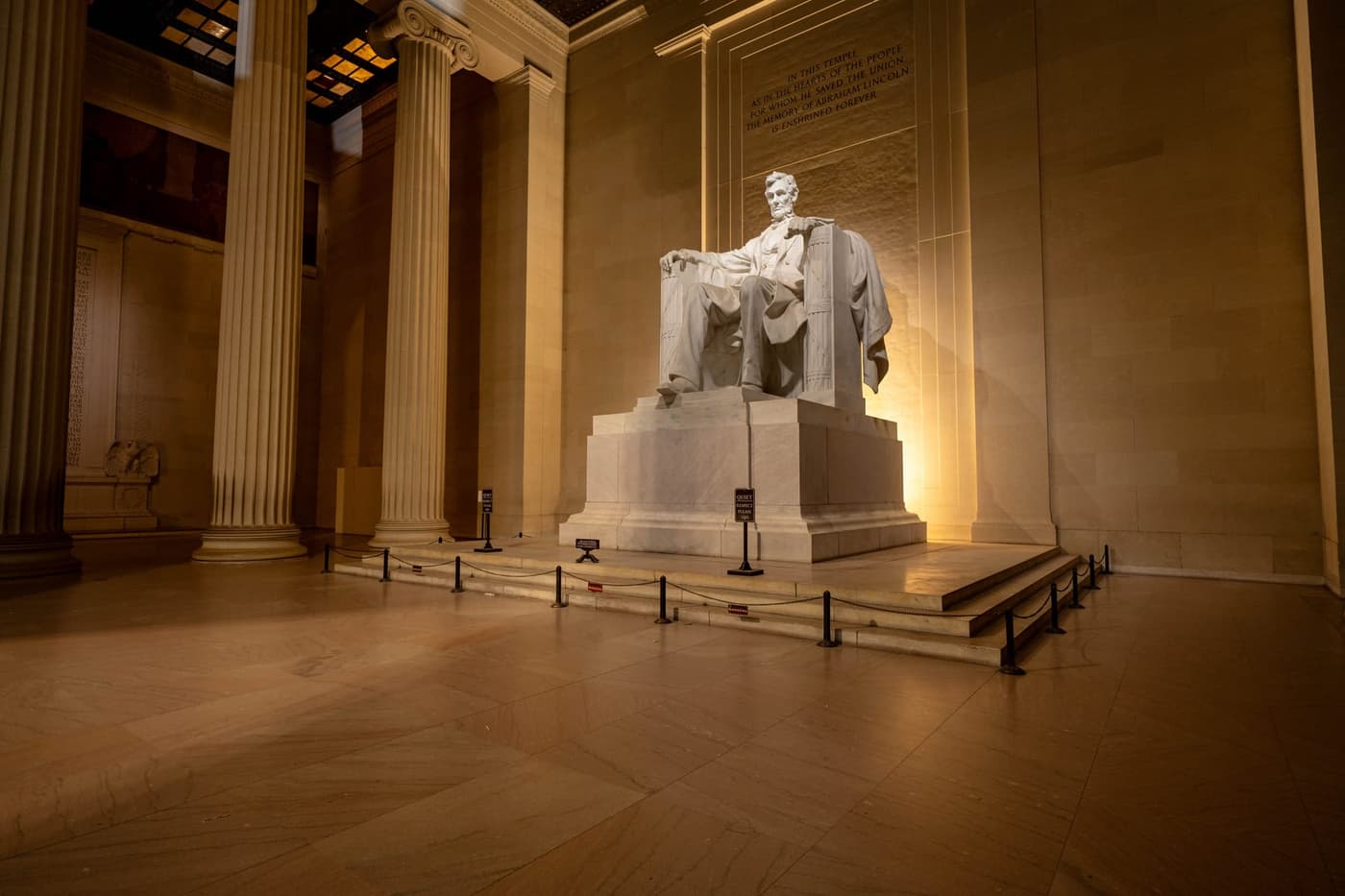
Inside, Daniel Chester French's 19-foot marble Lincoln sits in a pose that has been debated ever since it was unveiled. His left hand is clenched — resolve, tension, the fist of a wartime president who held the Union together by force. His right hand is open and relaxed — compassion, reconciliation, the hand extended to a broken country after the war. Whether French intended that symbolism or not, the memorial has absorbed it. The north chamber wall carries the full text of the Second Inaugural Address; the south wall holds the Gettysburg Address. Jules Guerin's murals above each text depict the angel of truth freeing a slave and the unity of North and South.
At night the memorial transforms. Floodlights wash the Colorado Yule marble until it glows against the dark sky, and the interior takes on a warm amber cast that makes the statue feel alive. The crowds thin. The Reflecting Pool stretches east toward the Washington Monument, and the geometry of the Mall — the axis that connects Lincoln to Washington to the Capitol — becomes unmistakable. It is the most powerful piece of architecture in the country, and it earns that reputation after the sun goes down.
Lincoln Memorial — Gallery
Vietnam Veterans Memorial
Below Grade, Above All Else
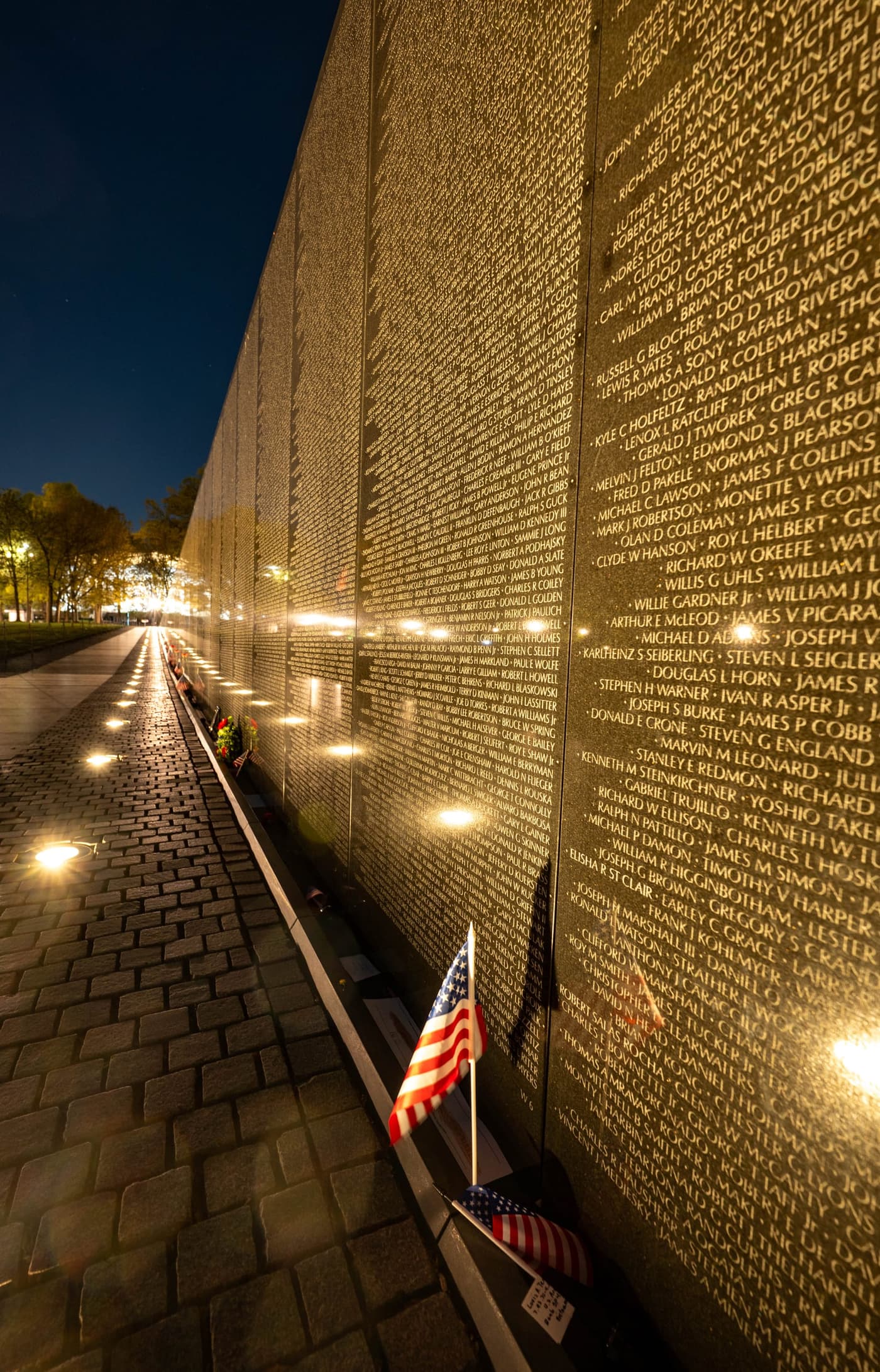
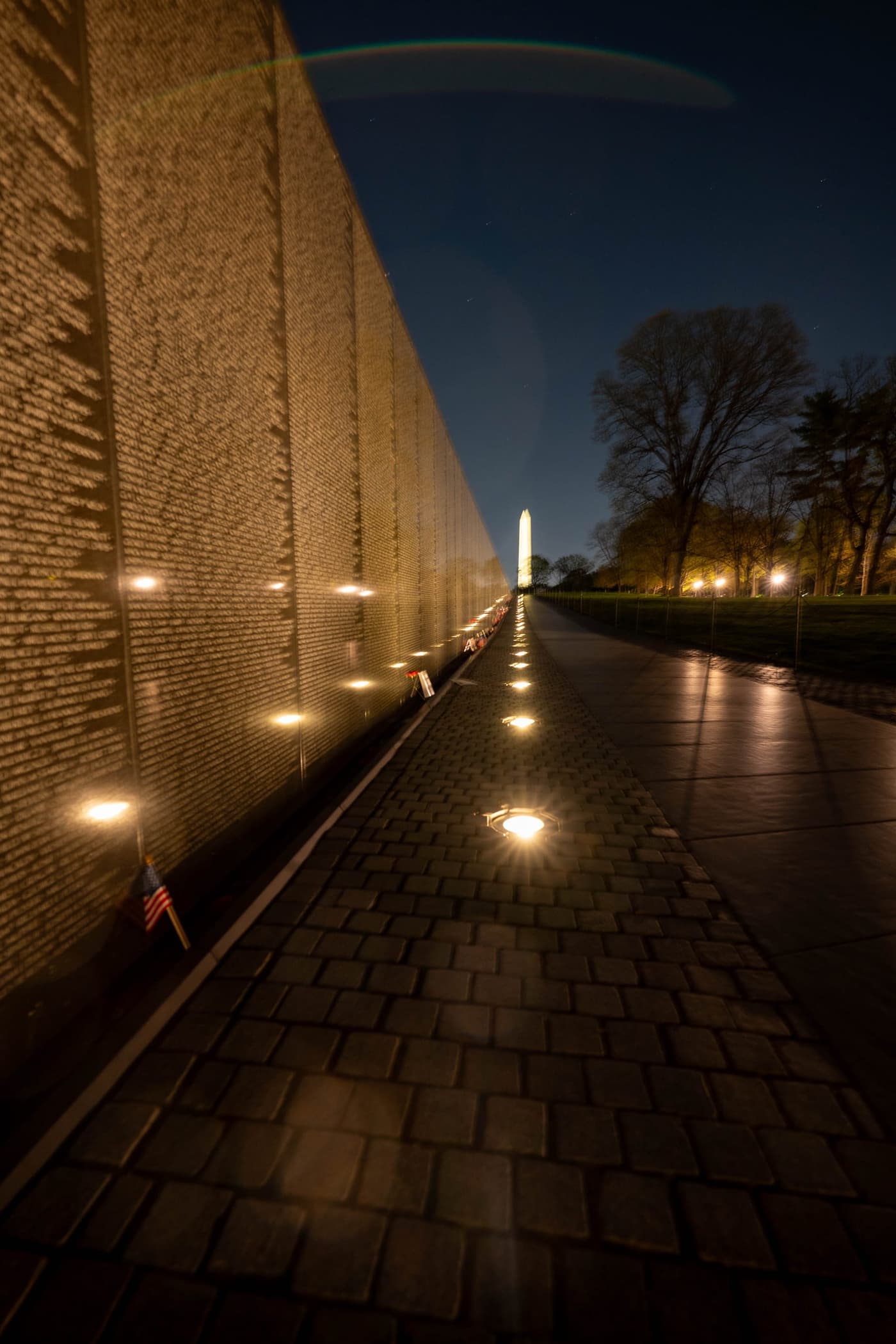
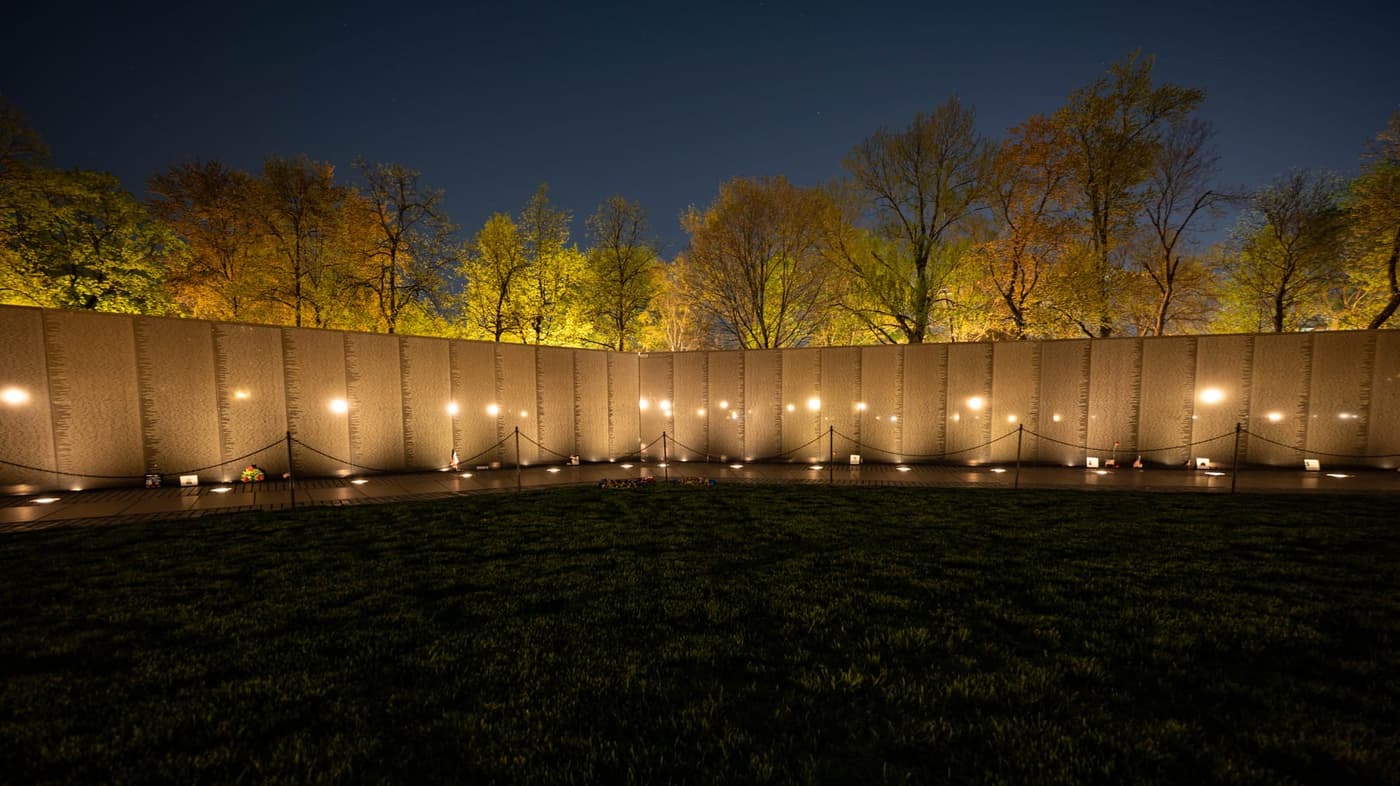
The Vietnam Veterans Memorial sits in a shallow wound in the earth of the National Mall — two walls of polished black granite that meet at a 125-degree angle and descend roughly ten feet below grade at their deepest point. Maya Lin designed it that way on purpose. There is no pedestal, no triumphal arch, no figure raised above the crowd. You walk down to it. The ground swallows you gradually, and the names rise around you — 58,318 of them, etched chronologically from the first casualty in 1959 to the last in 1975 — until the wall stands well above your head and you feel the full, unadorned weight of what happened.
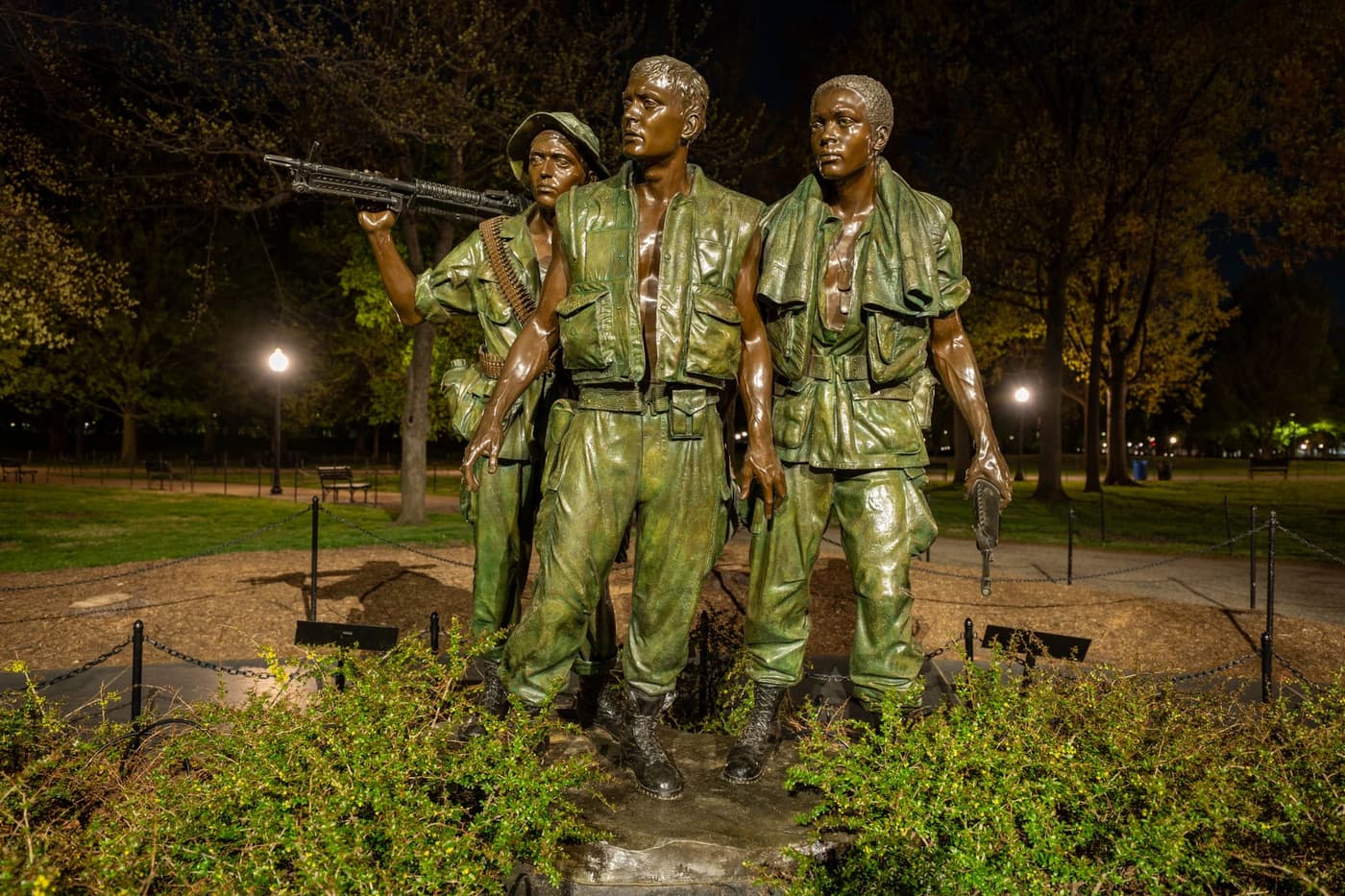
Lin, a 21-year-old Yale architecture student when she submitted the winning design, described it as a cut in the earth that time would heal. The decision to sink the memorial below the surrounding landscape was deliberate and controversial: it refuses to glorify war while honoring every person who served in it. At night, ground-level lights wash the granite panels and the names seem to glow from within. Visitors reach out and touch them, leave letters, press paper against the stone to take rubbings home. The Three Soldiers statue, added in 1984 just south of the wall, puts three young infantrymen in bronze — one Black, one white, one Latino — gazing toward the names of the friends they couldn't bring back.
There is no better time to visit than after dark, when the crowds thin and the memorial belongs to the people who need it most. The silence is absolute. The reflection in the stone puts your own face among the names, and that is the whole point.
Vietnam Veterans Memorial — Gallery
Petals, Tides, & Tunes
These monuments were the opening chapter — cherry blossoms to coastline to neon signs, 36 days chasing spring south and music north. See the full journey.
View Full Journey